
How to Handle High-Season Volume Without Hiring Extra Staff
Every agency knows the high season feeling. Enquiries double, the phone never stops, agents work late, and quality slips because everyone is drowning. The instinct is to hire temporary staff to cope. But seasonal hires are hard to find at short notice, take time to train just as the rush peaks, and leave the moment things calm down, taking that training with them.
Before adding people, it is worth asking a different question. How much of the high season workload is actually skilled work, and how much is repetitive handling that eats your agents' time without needing their judgment. In most agencies the second kind is large, and that is exactly the part you can absorb without hiring anyone.
Find the Work That Does Not Need a Person
Watch what your agents do during a busy week and a pattern appears. A big share of their time goes to the same low value motions repeated dozens of times. None of this needs skill. It needs presence, and presence is exactly what your team runs out of in high season.
- Answering the same first questions on price, dates, and availability
- Sending the same payment instructions to every client
- Chasing the same documents over and over
- Copying the same details from a chat into a record by hand
High season does not always mean you need more agents. Often it means your agents are spending peak hours on work that never needed an agent in the first place.
Absorb the Volume With Automation, Not Headcount
A few targeted changes free up a surprising amount of capacity. Each one takes a repetitive task off your agents and hands their hours back for the work only they can do.
Instant Auto-Reply
An automatic first reply answers common questions and gathers the basics, so an enquiry arrives already half handled, even at midnight.
Saved Message Templates
Ready replies turn a two minute message into a ten second one, for every repeated question your agents answer all day.
Self-Serve Booking Link
The client enters their own details and pays through a link, removing the back and forth that clogs every booking.
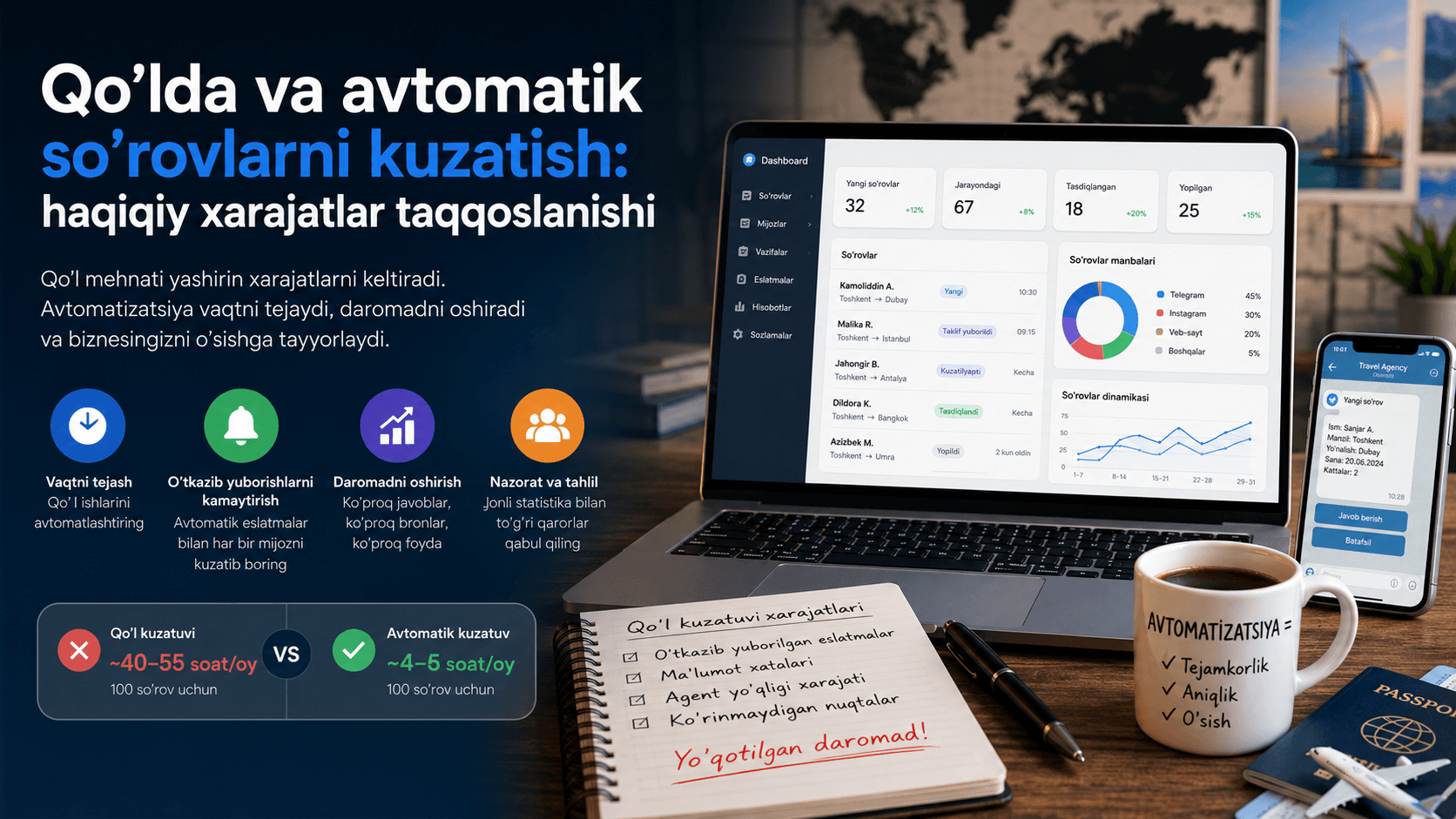
The effect compounds in a rush. When each booking takes ten minutes instead of forty, the same team handles far more volume without longer hours. The peak stops feeling like a flood and starts feeling like a busy but manageable week, on the staff you already have.
The Math of Freed-Up Hours
The saving sounds small until you scale it across a season. Trim thirty minutes off each booking and a team doing twenty bookings a day gets ten hours back every single day. That is more than a full extra person's worth of capacity, found inside the team you already pay, without an interview, a contract, or a training week. The agent you were about to hire for the rush is hidden in the half hour your current agents waste on each booking. Automation simply gives it back.
Measure Where the Time Actually Goes
Before you automate anything, spend one busy week noticing where the hours disappear. You do not need a formal study, just a rough tally of how often each repetitive task comes up and how long it takes. Most owners are surprised by the result. The work that feels biggest is often not the work that eats the most time, and the real drain turns out to be some small motion repeated forty times a day. Automate the task with the highest count first, not the one that feels most annoying, and you free up the most hours for the least effort.
What Not to Automate
Automation is for the repetitive motions, not for the moments that need a human. A nervous first time traveller, a complaint, a complex multi country itinerary, a client deciding between two expensive options: these are where your agents earn their value, and a canned reply makes the service worse. The goal is not to automate the conversation. It is to clear away the dozens of low value tasks around it so your agents have the time and attention for the few that genuinely need a person. Automate the routine so your people are free for the exceptions.
Keep the Personal Touch Where It Counts
Clients do not mind an instant auto-reply or a booking link, as long as a real person appears the moment the question gets specific. Handled well, automation makes your service feel faster, not colder, because nobody waits hours for a basic answer and every agent has time to be present when it matters. The agencies that win high season are rarely the ones that hired the most temporary staff. They are the ones whose regular team stayed calm, fast, and human because the busywork was handled for them.
Prepare Before the Season, Not During It
The mistake is waiting until the rush to fix the workflow, when there is no time to set anything up. The work happens in the quiet weeks before. Build your templates, set up the auto-reply, get your booking links ready, and tighten your process while things are calm. Then the season arrives and your team is faster from day one instead of scrambling to cope.
Done this way, you reach the same outcome a seasonal hire promises, more capacity at peak, without the cost, the rushed training, or the empty desk when the season ends. If you want help finding the repetitive work eating your high season and automating it before the rush, reach out for a free consultation.