
Common Booking Flow Mistakes Travel Agencies Make
Most travel agencies in Uzbekistan lose clients less because they offer the wrong tours than because the path from "I'm interested" to "I've paid and I'm confirmed" is broken, unclear, or just exhausting. A client sends a message, gets a quote, then hears nothing. Or they're asked for their passport at the enquiry stage and quietly back away. Or they pay, and nobody sends them proof.
These are process problems, not service problems. And process problems can be fixed. Below are the seven most common booking flow mistakes we see across agencies, along with the real consequence of each and a practical fix you can implement now.
"Most lost bookings aren't lost because of price. They're lost because the client wasn't sure what to do next, and the agency didn't tell them."
The 7 Mistakes, and How to Fix Them
No clear handoff from enquiry to booking
When a client enquires, the agent handles it as a conversation, not a process. There's no defined moment when "we're just chatting" becomes "this is a real booking." The client doesn't know where they stand, and neither does the agent's manager.
Clients who are genuinely ready to book fall through the cracks. Agents spend time re-explaining the same tour to people who already said yes. Revenue that should have closed doesn't.
Use a CRM with defined pipeline stages: Enquiry → Quote Sent → Deposit Awaited → Confirmed → Travelling → Completed. When an enquiry moves to a stage, both the client and the agent know exactly what happens next. Automations can send the right message at each step without agent effort.
Asking for too much information too early
Some agencies ask for passport details, date of birth, and full family information at the enquiry stage, before the client has even decided they want the tour. The intent is to save time later, but it reads as intrusive.
Clients hesitate. Sharing a passport copy with a stranger on Telegram feels risky, especially before any price or commitment has been discussed. A significant portion of enquiries never get to the quote stage simply because of this friction.
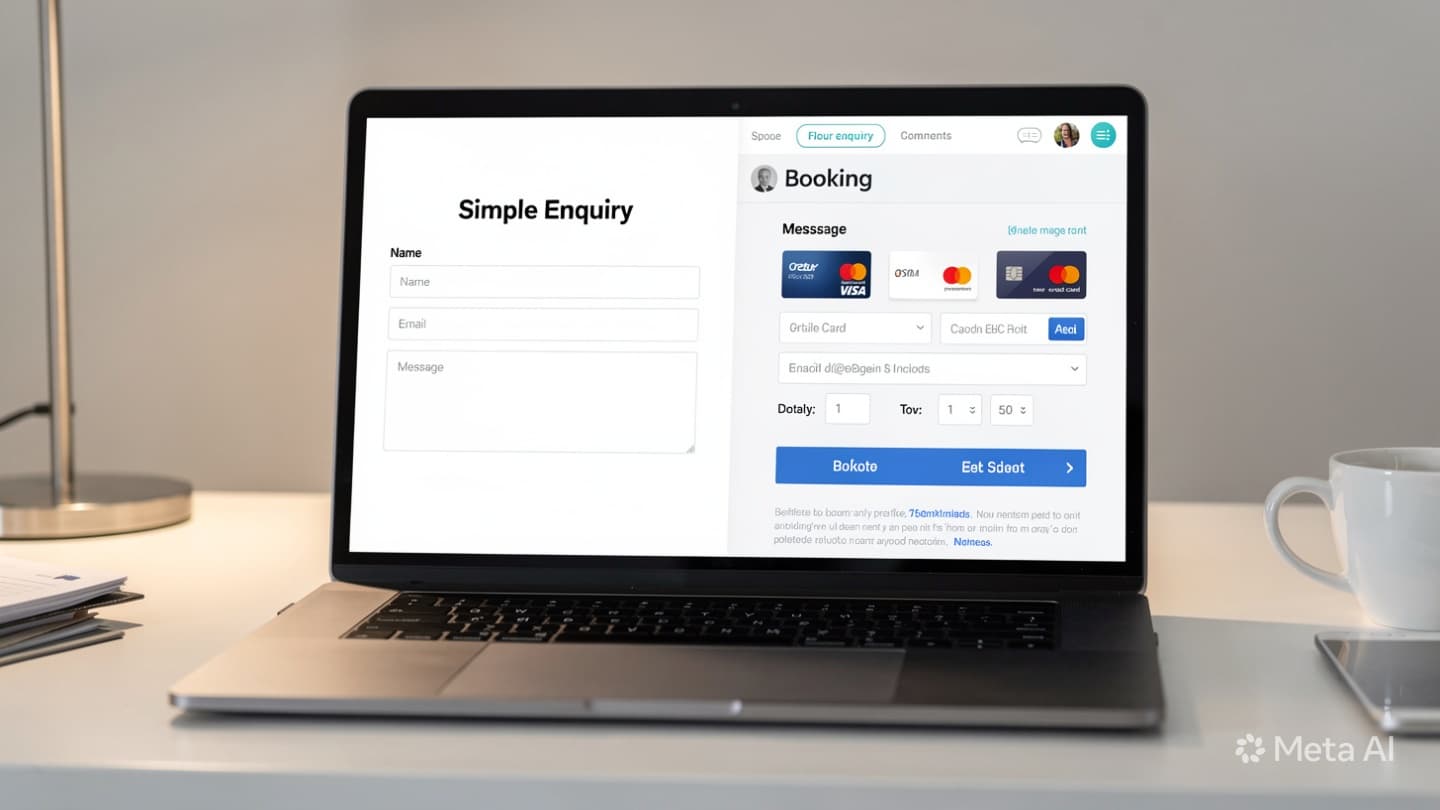
Collect only destination, travel dates, and number of travellers at the enquiry stage. Request passport details only after the client has confirmed they want to book. A clear two-stage form, one for enquiry, one for booking, removes the friction entirely and increases enquiry-to-booking conversion.
Accepting payment without a confirmation page or receipt
The client pays, via card transfer, Click, or cash, and receives nothing in return except a "Thanks, received" message in Telegram. There's no booking reference, no receipt, no itinerary summary, and no next steps.
The client immediately feels uncertain. Did it go through? Was the amount correct? What happens now? This anxiety turns into WhatsApp follow-ups that interrupt your agents, and in disputes, the client has no proof of what was agreed.
Every payment should trigger an automatic confirmation message containing the booking reference, tour summary, amount paid, payment date, and what happens next. This takes 5 minutes to configure in a booking system and eliminates confirmation anxiety entirely.

No payment deadline set, clients delay indefinitely
The quote is sent, the client says "great, I'll pay soon." The agent waits. Days pass. The agent sends a polite nudge. More days pass. Meanwhile, the seat availability or hotel pricing changes.
The agency holds inventory mentally for clients who were never truly committed. When availability expires, either the agency absorbs the cost or the client is disappointed. Agents waste follow-up time on low-intent leads.
Every quote must include an explicit expiry: "This price is held until Friday 18:00." When a client accepts the quote, the next message should contain the payment link with the deadline shown clearly. Automated reminders at 48 hours and 24 hours before expiry close a large share of pending quotes without any agent action.
Manual data re-entry from Telegram or WhatsApp into spreadsheets
Client details arrive in a Telegram message. The agent copies names, passport numbers, dates, and tour details by hand into a spreadsheet or another system. This happens for every single booking.
Data entry errors, wrong passport numbers, misspelled names, wrong dates, create problems downstream: refused visas, incorrect tickets, and disputes. Each booking takes 15-30 minutes of non-value-adding work. For an agency handling 40 bookings a month, that's 10-20 hours of pure overhead.
Use a booking form that clients complete themselves. The data goes directly into the CRM, no re-entry, no transcription errors. The form can be sent as a link in Telegram or embedded on your website. When the form is submitted, the CRM card is created automatically with all fields populated.
Skipping the follow-up after a quote is sent
The agent sends a detailed quote. The client goes quiet. The agent assumes the client isn't interested and moves on. In many cases, the client simply got distracted or was waiting for a convenient moment to respond.
Research consistently shows that a single follow-up message within 48 hours converts a significant portion of "silent" leads. Agencies that don't follow up are leaving confirmed bookings behind, simply because nobody checked in rather than because the client said no.
Set a rule: every quote automatically triggers a follow-up task for the agent at 48 hours. In a CRM pipeline, this is a simple automation: if a quote has been in "Quote Sent" for 48 hours with no status change, create a task and optionally send an automated message asking if the client has any questions. This one step alone significantly improves conversion rates.

No cancellation policy communicated at booking time
The client books and pays. The cancellation policy is never mentioned, or it's buried in fine print the client never reads. When they need to cancel six weeks later, they're shocked by the fee and feel misled.
Disputes, refund demands, and negative reviews. The agency is legally and reputationally exposed. Even if the policy is entirely standard, not communicating it at booking time makes the client feel deceived, and they'll tell others.
Make the cancellation policy part of the booking confirmation, not the fine print, but a clearly readable paragraph. Ideally, have the client acknowledge it with a checkbox on the booking form before they pay. This protects the agency in disputes and sets clear expectations from day one.
None of these fixes require a large investment. Most can be implemented in a week. The compounding effect of fixing all seven is a booking flow that converts better, runs with less agent effort, and produces fewer disputes.
Summary: Mistakes, Consequences, and Fixes
| Mistake | Consequence | Fix |
|---|---|---|
| No enquiry-to-booking handoff | Ready clients fall through the cracks | CRM pipeline with defined stages |
| Passport requested too early | Clients bail before the quote | Two-stage form: enquiry then booking |
| No confirmation after payment | Client anxiety and follow-up calls | Auto-confirmation with receipt and next steps |
| No payment deadline | Clients delay; inventory lost | Expiry on every quote + automated reminders |
| Manual data re-entry | Errors and wasted agent hours | Self-serve booking form → CRM auto-populate |
| No follow-up after quote | Silent leads lost permanently | 48-hour follow-up task automation |
| Cancellation policy not shared | Disputes and negative reviews | Policy in confirmation + checkbox at booking |
If your agency is still running bookings through Telegram threads and spreadsheets, start with mistakes 1 and 5, they have the highest compounding impact. A CRM pipeline and a self-serve booking form will change the daily rhythm of your operations faster than anything else. If you'd like to see how this looks in practice, book a free consultation and we'll walk through your current flow together.