How Uzbekistan's Tourism Growth Is Changing Agency Operations
Growth is the problem every agency wants to have, and Uzbekistan's tourism boom has handed it to many of them. More travellers, more enquiries, more bookings: on the surface, an unambiguous good. But growth has a way of breaking the very habits that worked when an agency was small. The notebook that tracked twenty enquiries fails at two hundred. The single agent who remembered every client cannot hold them all anymore. The casual reply-when-you-can rhythm starts costing bookings to faster competitors.
This is the quiet challenge behind the good news. Rising demand does not just give an agency more of the same work; it changes what the work requires. The agencies that grow well are the ones that recognise this and upgrade how they operate before the volume overwhelms the old way of doing things.
The New Pressures Growth Creates
A few new pressures arrive with volume. Each is small on its own, but together they break the manual way of working.
More Enquiries Than Memory Can Hold
Volume that was manageable in a notebook becomes lost leads the moment it grows past what one person can track.
Faster Responses Expected
Clients with more choices wait less, so a slow reply now loses the booking to a quicker competitor.
More Channels at Once
Telegram, Instagram, the website, and walk-ins all arriving together, with no single place they collect.
More Complex Trips
More international and multi-stop travel means more moving parts to coordinate per booking, not just more bookings.
The Real Risk: Looking Worse as You Get Busier
There is a cruel irony in growth done badly: the busier an agency gets, the worse it can look to clients. At low volume, an agent can paper over a disorganised process with personal attention, remembering each client and catching most things by hand. As volume rises, that personal memory runs out, and the cracks start to show exactly when more people are watching. Enquiries go unanswered, a client gets quoted twice, a deadline is missed, and the agency that felt attentive at twenty bookings feels chaotic at a hundred. Clients do not see your rising volume as an excuse; they see a service that got worse. This is why operations have to be upgraded ahead of the growth, not after it, because the damage to reputation happens during the busy period you were hoping to capitalise on.
Growth does not just add more work, it breaks the habits that handled the old amount. The notebook that managed twenty enquiries quietly loses leads at two hundred.
Speed Is Now the Battleground
One change deserves singling out, because it decides more bookings than any other: response speed. As the market grows, clients have more agencies to choose from and less patience to wait. A traveller who sends the same enquiry to three agencies often books with whoever replies first and clearly, not necessarily the cheapest. At low volume an agent can keep up with quick replies by hand. As enquiries multiply across Telegram, Instagram, and the website, keeping that speed by memory becomes impossible, and the agency that has automated instant acknowledgements and organised its incoming enquiries simply answers faster than the one still checking several apps by hand. In a growing market, speed is not a nicety. It is how the booking is won.
Low-Volume Habits vs High-Volume Systems
The shift growth forces is from habits that depended on a person remembering, to systems that hold the work for them. The same agency that ran smoothly on memory at low volume needs a different foundation once the numbers climb.
Low-Volume Habits
- Enquiries remembered, not recorded
- One agent handling everything personally
- Replies whenever someone is free
- Fine at ten bookings, breaks at fifty
High-Volume Systems
- Every enquiry captured the moment it arrives
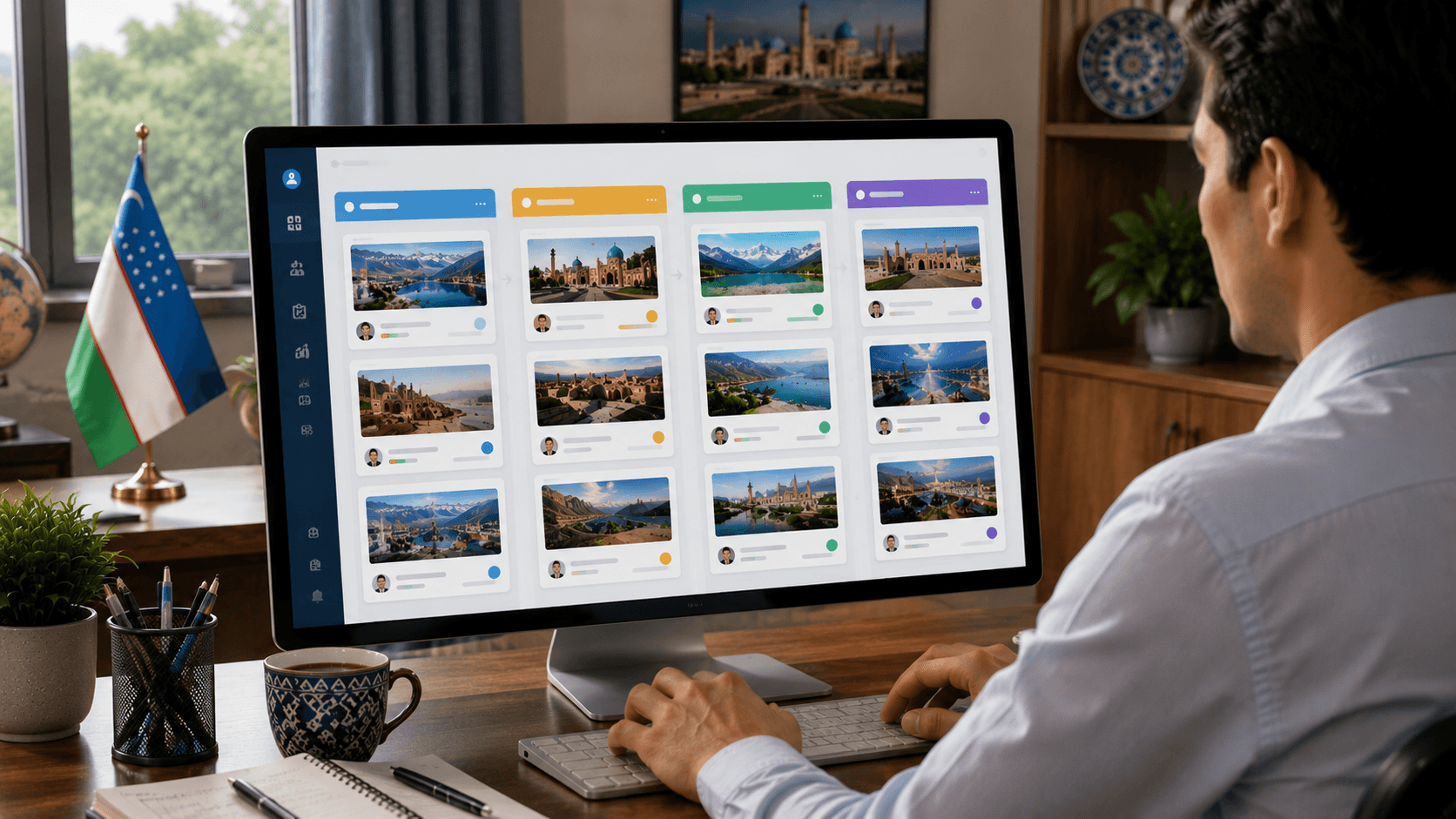
- Work shared with a clear status anyone can see
- Fast replies even on the busiest days
- Scales from ten to fifty without chaos
The Upgrades That Actually Matter
A few upgrades carry most of the weight. None requires a big team, only a decision to put the work into a system before the volume forces your hand.
Capture Everything in One Place
Every enquiry from every channel lands in one system, so growth stops meaning lost leads.
Make Status Visible to the Team
Anyone can see where each booking stands, so work no longer lives in one agent's head.
Automate the Repetitive Parts
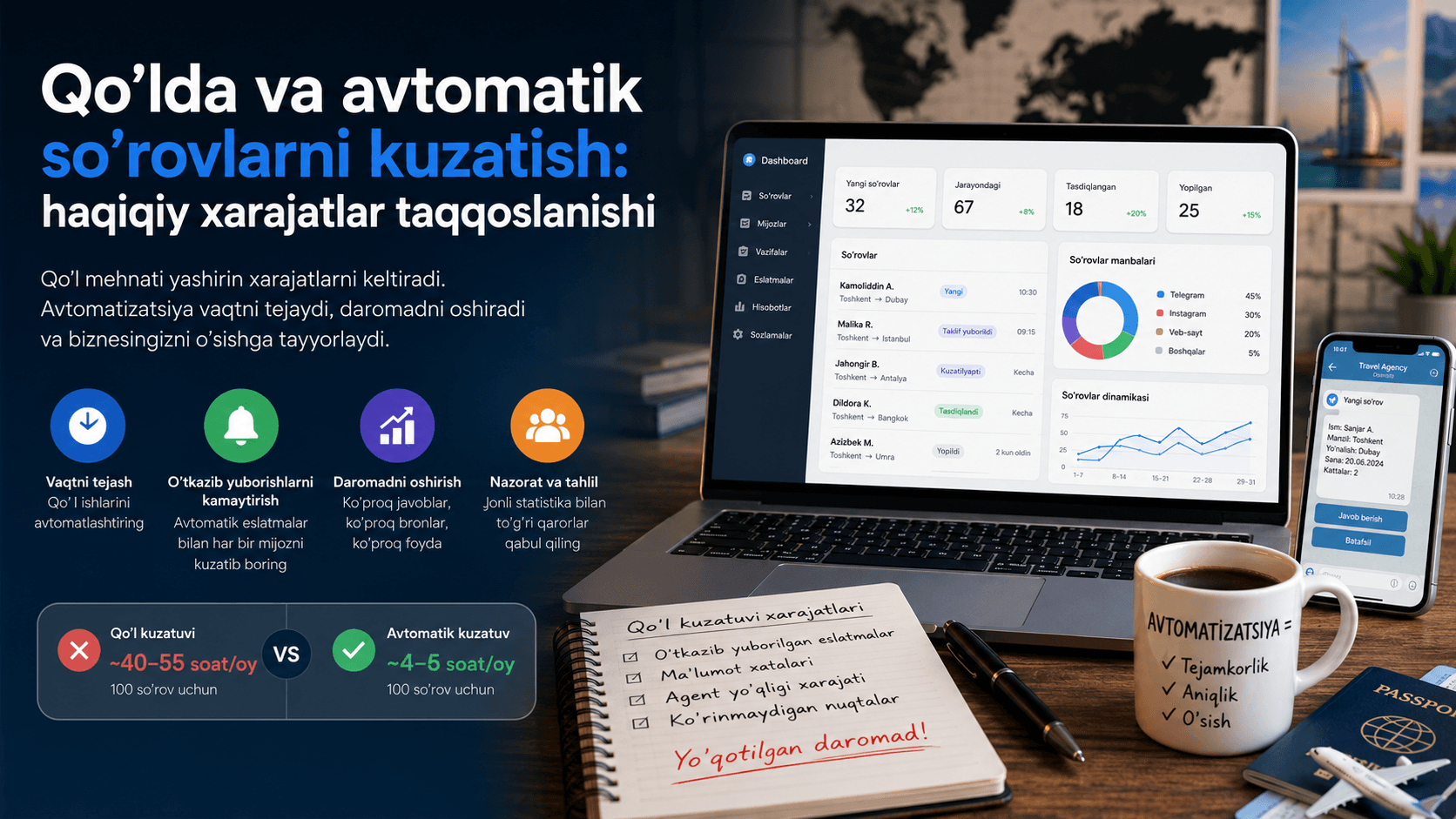
Confirmations, reminders, and payment links handled automatically, freeing agents for real conversations.
Watch the Numbers as You Grow
Live reporting shows where the volume and the money actually come from, so you scale what works.
Why Systems Beat Just Hiring
The instinct when volume rises is to hire: more enquiries, so more agents. Hiring has its place, but on its own it often just multiplies the chaos. If the underlying way of working is manual and disorganised, adding people adds more personal chats, more scattered notes, and more clients held in more separate heads. You end up paying more salaries to run the same broken process at a larger scale.
The leverage is in the system, not just the headcount. An agency with one organised system can often handle far more volume per agent than a disorganised one with twice the staff, because the system absorbs the repetitive work and keeps everything visible. Fix how the work flows first, and each person you hire then adds real capacity instead of just more noise. Hire to grow, but upgrade your operations first so the growth does not collapse under its own weight. If you want your agency ready to handle rising volume without the chaos, reach out for a free consultation.